

"Quand un salon littéraire devient un boudoir pour dames"
31 Août 2009

 ASSOCIATED PRESS In this 1985 file photo originally
released by Solters, Roskin and Friedman, Inc., songwriter Ellie Greenwich is shown in New York. Greenwich, who wrote such classic pop songs as "Chapel of Love, " "River Deep, Mountain High" and
"Be My Baby" with Phil Spector died of a heart attack, Wednesday, Aug. 26, 2009, according to her niece Jessica Weiner. She was 68.
ASSOCIATED PRESS In this 1985 file photo originally
released by Solters, Roskin and Friedman, Inc., songwriter Ellie Greenwich is shown in New York. Greenwich, who wrote such classic pop songs as "Chapel of Love, " "River Deep, Mountain High" and
"Be My Baby" with Phil Spector died of a heart attack, Wednesday, Aug. 26, 2009, according to her niece Jessica Weiner. She was 68.
NEW YORK -- Ellie Greenwich, who co-wrote some of pop music's most enduring songs, including "Chapel of Love," "Be My Baby" and "Leader of the Pack," died Wednesday, according to her niece. She was 68.
Greenwich died of a heart attack at St. Luke's Roosevelt Hospital, where she had been admitted a few days earlier for treatment of pneumonia, according to her niece, Jessica Weiner.
Greenwich, a member of the Songwriters Hall of Fame, was considered one of pop's most successful songwriters. She had a rich musical partnership with the legendary Phil Spector, whose "wall of sound" technique changed rock music. With Spector, she wrote some of pop's most memorable songs, including "Da Doo Ron Ron" and "River Deep, Mountain High." But Spector wasn't her only collaborator.
She also had key hits with her ex-husband Jeff Barry, including the dynamic song "Leader of the Pack" (years later, Broadway would stage a Tony-nominated musical with the same name based on her life).
"He was the first male I could actually harmonize with," she once said.
Greenwich was a native of Brooklyn. While she garnered her greatest success as a songwriter, Greenwich started out as a performer. She performed in talent shows as a child, and by the time she was a teen, she had her own group, called The Jivettes.
She went to college, where she met Barry, and shortly after graduation, began working for songwriters Jerry Leiber and Mike Stoller, where she got her break. She had her first chart success with the Jay and the Americans song "This Is It," which she wrote with Doc Pomus and Tony Powers.
She also had success with Barry as the duo The Raindrops with the songs "What a Guy" and "The Kind of Boy You Can't Forget."
Greenwich also worked as an arranger and singer, a role that saw her working with artists including Frank Sinatra and Ella Fitzgerald.
She is also credited with helping Neil Diamond get his start and was a co-producer of early Diamond hits "Cherry, Cherry" and "Kentucky Woman."
"Ellie Greenwich was one of the most important people in my career. She discovered me as a down-and-out songwriter and with her then-husband Jeff Barry co-produced all my early hits on Bang records," said Diamond in a statement. "She has remained a great friend and mentor over the years and will be missed greatly."
Among the more famous songs she wrote are "Baby I Love You," "Do Wah Diddy Diddy" and "Look of Love."
Greenwich is survived by a sister, brother-in-law, nephew and her niece.

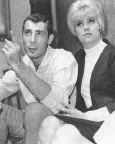
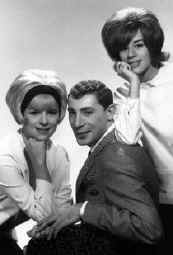


TELEGRAPH Published: 5:52PM BST 27 Aug 2009

In 2004 Rolling Stone magazine's list of the 500 greatest songs of all time included six by Ellie Greenwich and her husband and writing partner, Jeff Barry – more than by any other songwriting team. They had 17 singles in the pop charts of 1964, surpassed only by John Lennon and Paul McCartney of the Beatles and the Americans Holland, Dozier and Holland.
When, in the spring of 1962, the songwriter Jerry Leiber discovered 21-year-old Ellie Greenwich singing at a piano in the Brill Building in New York, he thought she sounded like Carole King, but looked more like the comedienne Judy Holliday. He observed a strapping young woman wearing a college blazer over a prim blouse with a Peter Pan collar, her hair teased into a platinum helmet.
She had an early success the following year when, with Jeff Barry, she wrote the animated dance songHanky Panky, which did well for Tommy James and The Shondells and eventually topped the American charts.
Although 1964 was the year the Beatles conquered America, it was also the heyday of the Greenwich-Barry hit factory. In June the Dixie Cups took Chapel of Love to number one in the US, and in August Ellie Greenwich had her first British number one with Do Wah Diddy – a huge hit for Manfred Mann.
She was hoping to repeat the success of Da Doo Ron Ron, which she, Barry and Spector had written in two days the previous year and which had been a hit for the American girl group the Crystals.
When she and Barry came up with Do Wah Diddy, it was recorded first by another American band, the Exciters. But this struggled to reach number 78 in the US hit parade, and Ellie Greenwich and Barry were preparing to record it themselves as The Raindrops when they heard that Manfred Mann had released it in Britain.
Manfred Mann's lead singer, Paul Jones, had bought the Exciters' version and thought the title a great euphemism for sex. The song went to the top of the charts in Britain and America, and launched Manfred Mann on the international pop scene.
As Ellie Greenwich, Barry and Spector worked on Da Doo Ron Ron at Spector'soffice, Spector's friend Bill Walsh dropped in, inadvertently inspiring the opening couplet: "I met him on a Monday and my heart stood still/Somebody told me that his name was Bill." The recurring gobbledegook line Da Doo Ron Ron was originally inserted pending a proper lyric, but Spector liked it so much he kept it in.
Ellie Greenwich considered both Da Doo Ron Ron and Do Wah Diddy to be rooted in the tradition of nursery rhyme. "Everybody of every age can sing them," she remarked, "because they are so easy to remember."
Eleanor Louise Greenwich was born on October 23 1940 in Brooklyn, New York, but moved to Long Island when she was 11. Named after Eleanor Roosevelt, she learned music from her Catholic father, a painter turned electrical engineer; her Jewish mother managed a doctor's surgery. Ellie's father played the balalaika and mandolin, but when friends from Germany gave the family a bulky Hohner accordion, she took lessons and learned to play it.
At 14 she formed her own group, the Jivettes, singing at schools and hospitals, and while still a schoolgirl, started writing her own songs. Two of these, Cha-Cha Charming and Silly Isn't It, were recorded by RCA in 1958, but the single flopped.
Rejected by the Manhattan School of Music because it did not accept accordion students, Ellie enrolled at Queens College to study piano and later at the private Hofstra University on Long Island. After graduating, she briefly taught English at a high school before choosing a career in music.
She found a berth at the Brill Building on Broadway with the songwriting partnership of Jerry Leiber and Mike Stoller, selling her songs for $25 a time. Her first success was with He's Got the Power, written with Tony Powers and recorded by the Exciters.
Signed on a weekly salary of $100, Ellie Greenwich played another of her songs to Phil Spector, but the young producer seemed more interested in preening himself in the mirror. "Listen to me, you little prick," she snapped. "Did you come to look at yourself or to hear my songs?"
In March 1963, after Spector had recorded her doo-wop number Why Do Lovers Break Each Other's Hearts? with Bob B Soxx and the Blue Jeans, Ellie Greenwich, hearing her work on the radio for the first time, was so thrilled that she crashed her car into a toll booth.
The record reached number 38 in the charts, and her follow-up (Today I Met) The Boy I'm Gonna Marry finished one behind at number 39 that May.
A year earlier Ellie had married the cadaverous Jeff Barry (born Joel Adelberg), a distant relation, who replaced Tony Powers as her writing partner. Despite his wife's inauspicious introduction to Spector, Barry and the producer hit it off at once, and in 1963-64 the Greenwich-Barry partnership composed 15 hit songs that sealed Spector's reputation and established the newly-weds as major pop songwriters.
(And) Then He Kissed Me and Da Doo Ron Ron – both recorded by the Crystals – were the first songs they wrote with Spector. Then came Be My Baby, a huge hit for the Ronettes, reaching number two in the US charts.
Spector's collaboration with Ellie Greenwich and Jeff Barry had, in Tom Wolfe's phrase, crowned him the "tycoon of teen", but by 1965 Spector's powers were already waning, and a week-long songwriting session between them produced only three numbers.
One of the three songs, however, was the idiosyncratic River Deep – Mountain High, recorded by Ike and Tina Turner in February 1966, which perhaps more than any other Spector production defined his "Wall of Sound".
A year before, Ellie Greenwich had recorded one of her own songs, You Don't Know, and there was talk of launching her as an American Dusty Springfield and touring Britain. But the record flopped, the idea was dropped, and she divorced Barry in December 1965.
Although the Greenwich-Barry writing partnership foundered with the marriage, the pair enjoyed continued success as producers of Neil Diamond's early hits.
Ellie Greenwich had discovered Diamond and persuaded Leiber and Stoller to give him a songwriting contract. With Diamond and Barry, she formed a company to publish and promote Diamond's songs.
In the late 1960s Ellie Greenwich again tried unsuccessfully to launch a solo singing career, but suffered a nervous breakdown and turned to writing and singing commercials and jingles.
Ellie Greenwich, who died on August 26, was a member of the American Songwriters' Hall of Fame.
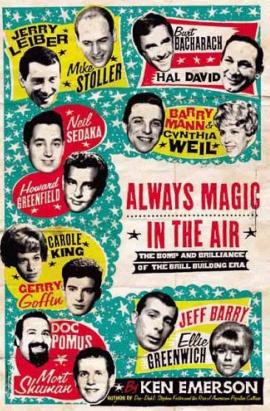

"Lure Of An Era" By: Ellie Greenwich
This article was written several years ago for some great people at WCBS-FM in New York City
It's 1963, and wherever you were, whatever you were doing, the radio was playing this song. (Drumbeat begins to Be My Baby, and the audiences went passionately wild...every time). This line opened my show Leader Of The Pack in 1984, and when the show is performed today at High Schools, Colleges and theaters, the reaction is the same...why?
I'll be the first to admit that when I first started writing songs professionally, in the early 60's, I never...not once, wondered what would be going on twenty-five, thirty years later. Oh, sure, I wondered how my marriage would be, how many kids I would have, where I would be living, and what I would be doing...but I never considered whether or not the music that was being created during this era would have longevity and survive.
Listening to the radio today, and seeing the number of revivals and "Oldies" shows, it's obvious that the music has lived and thrived. It has done that in spite of what would seem to be cultural changes and a more complex society. If you view the survival and prospering of 60's music from a somewhat psychological reference, maybe it's survival makes a lot of sense.
Being a grown-up...I mean a true fifty-ish/sixty-ish adult...who has had many cyclesof good and bad times, illnesses, death of family members, etc., coming to terms with certain realities, and realizing and accepting that while we may feel eighteen and twenty years old, we are not, and we shouldn't try to be. Life today seems more violent, more complex, more uncertain and harder to hold on to than it was back then, especially the early 60's. Life was fairly simple and straightforward. There was a large degree of innocence, and flirting, courting and naiveté was the rule, not the exception. The music of that era reflected the simple life and easy times. It was a comfortable place to be, and people knew what to expect. JFK had people feeling hopeful. My generation was just graduating High School or College or moving on to the Trades or the Service. It was an exciting time, and people had a plan...or seemed to. There was something (intangible), to anchor yourself to. One of the biggest anchors was the music which was paramount in every waking hour of their lives...our lives...
Now, thirty years older, I believe that many of my generation have reached a new plateau and it's an interesting place. You can realize the fruits of years of hard work and you can watch your grown children slipping into the roles you are now leaving, but you also are painfully aware that you don't quite fit into society any longer. It's not the same world you knew. You are facing old age (oops!...I mean the "Golden Years"), and you really don't want to. It's a frightening time for many people. We feel somewhat scattered and directionless and we wish we were back in the 60's. We need to grab that anchor of stability once again, but can't find it...until we hear a familiar tune on the radio...you know, a song we listened to while our parents nagged and complained; a song we first-kissed to; a song we listened to with our friends while hanging out, sometimes pretending to be the groups themselves. And for those precious moments we can go back where we came from - go back to where it was fun, happy, safe, simple and comfortable. Need I say more?
And let's not forget the importance of the on-air personalities, none more prominent than Cousin Brucie. He is the reassuring figure you have always been able to latch onto...the older brother, the power that bridges the gap between yesterday and today; the person who keeps the music alive on the airwaves and in our hearts.
When you can squeeze hundreds or thousands of us into a hall or theater to see an "Oldies" show, there is a tremendous sigh of relief...of going home. Whether you experience the music live or hear it on the radio, the feelings are the same. These audiences are your friends and family. They are all as unsettled as you are, going through the same confusion, changes and pain, trying not to get pushed aside. Being together makes us feel better...more secure, almost back in our mother's arms. The music is the catalyst for bringing us together...and yes we do truly love it and can get excited and sing along and scream. We can all leave the show in our mini vans, station wagons, etc., and two or three couples go to the diner for coffee afterwards. We can talk about the show, how good or bad the groups were, etc. Many of today's youth are discovering, performing and loving this music now; it's in new movies and numerous commercials; and in speaking to the kids who have performed in many different productions of Leader Of The Pack, they all had fun - a taste of the innocence that we enjoyed - and a sincere yearning to know what it was like growing up and living in the 60's. Maybe their society has gotten too complex and confusing for them too. Maybe they're searching for what we had.
In any event, It's 2001, and wherever you are, whatever you are doing, the radio is playing this song. (drumbeat begins to Be My Baby, and the audiences go passionately wild...every time)...but the real reason for the success of the music will hardly be noticed.


/image%2F0865369%2F20180627%2Fob_072583_crystal.jpg)
/http%3A%2F%2Fwww.chroniclelive.co.uk%2Fincoming%2Farticle1339066.ece%2Falternates%2Fs615%2Fmuhammad-ali-593975650.jpg)
/image%2F0865369%2F20160415%2Fob_c3c464_f0ff7387a509afe644775a25b2e06a4e.jpg)
/image%2F0865369%2F20160303%2Fob_7e9aaa_serge-gainsbourg.jpg)