

"Quand un salon littéraire devient un boudoir pour dames"
18 Juin 2009
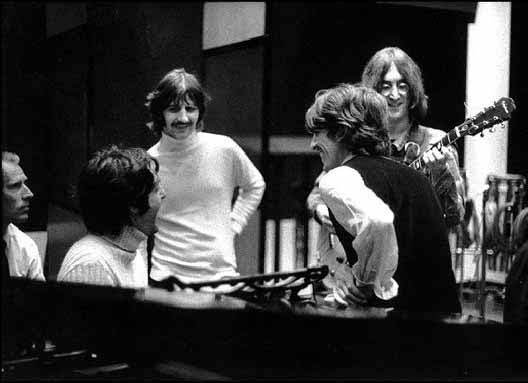


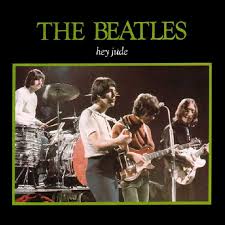

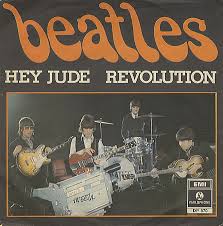
The song appeared in two distinctly different incarnations, a raucous electric "Revolution", and a slowed "Revolution 1". A third connected piece written by Lennon, the heavily experimental "Revolution 9", appeared on the same album side as "Revolution 1" on The Beatles. Both were on the second side of the second disc. A third unconfirmed version, "Revolution 1, Take 20" has recently surfaced on the internet.

The first version of "Revolution" to be released (though the last to be recorded) was the B-side of the "Hey Jude" single, released in late August 1968. The single, as a stand-alone, reached #12 in the U.S.
A product of the recording sessions for The Beatles (aka
The White Album), "Revolution" featured distorted guitars and an electric piano solo by session musician Nicky Hopkins. The single version of Revolution has a very distorted
guitar sound to it which was achieved by putting the guitars through the recording console which causes the channel to overload and create a fuzz sound. This track is said to be one of the
loudest and most aggressive Beatles songs; it begins abruptly with a loud, overdriven electric guitar played by John Lennon, a thundering, compressed drum beat from Ringo Starr and a ferocious scream from Lennon (the scream was an overdub
added when Lennon double tracked his vocal. Paul McCartney performed the scream on the semi-live performance for the promotional film because Lennon could not deliver the scream and catch his breath again in time to launch into the first
verse).
The musical form is a simple rock and roll chord progression, but the highly processed
elements and hyperbolic approach distinguished the track from nearly anything that had come before; the sound of "Revolution" is often cited as presaging heavy metal. "Revolution" later appeared on the 1970
Hey Jude compilation album created for the U.S. market and other compilations.
The Beatles performed the song semi-live (with live vocals performed over a pre-recorded instrumental track) in a specially produced promotional film shot by
director Michael Lindsay-Hogg at the same time as the Hey Jude promotional film. The film received its world premiere in Britain on David Frost's ITV television programme, 4 September 1968. As
the Beatles were singing the vocals live on the film, they elected to incorporate part of the vocal arrangement from the slower Revolution 1 version of the track. McCartney and
George Harrison added the
"shoo-bee-doo-wah" backing vocals unique to that version behind Lennon's lead vocal - thus making the vocals on the film performance a hybrid of the two versions of the song.
"Revolution 1" was recorded between 30 May and 4 June 1968, about 6 weeks before "Revolution", but released nearly three months later than the single. Lennon wanted the initial version to be released as a single but the other band members said it was too slow for a single.
Lennon, slightly irritated, resolved to remake the song in a version as loud and raucous as anything the Beatles had released, and he led the band through the faster recording which ended up backing "Hey Jude". Searching for a highly distorted and 'dirty'-sounding guitar sound, they plugged the guitars directly into the recording console, overloading the channel, and the resulting highly distorted tone satisfied Lennon and became the distinctive sound of the released version.
The original version, re-titled "Revolution 1" to distinguish it from the single version, was released on The Beatles in late November 1968.
"Revolution 1" contains a notable lyrical difference from the final "Revolution": Lennon's vocal for the track adds the word "in"
following the line "When you talk about destruction/don't you know that you can count me out". Lennon said in interviews that he was undecided in his sentiments toward the song's theme so he
included both options.


The bootlegged "Revolution 1, Take 20" acts as the missing link between "Revolution 1" and "Revolution 9." Low-quality monitor mixes of the full-length Take 20 had appeared on such bootlegs as From Kinfauns to Chaos, featuring studio chatter from Yoko talking about a number of subjects. Then in February 2009, a high-fidelity mono version surfaced on the bootleg Revolution: Take... Your Knickers Off! This release received great media fanfare, and this version is considered significant by many Beatles fans.
Take 20 is the same take that appeared on the album, but the bootlegged "Revolution 1, Take 20" runs a full 10:46, featuring an extended coda (of which only about 40
seconds appeared on the album version) much in the style of "Hey Jude."
This version, RM1 (Remix in Mono #1) of Take 20, is one of Lennon's many attempts to augment his long version of "Revolution" in a way that satisfied him before he
finally decided to create the short "Revolution 1" and the musique concrete "Revolution 9" instead. It lacks the electric guitar and horn overdubs of the album version, instead featuring twin tape
loops and some different electric guitar parts toward the end. The coda features a histrionic and frequently tape-distorted vocal from Lennon, many snatches of which appear in "Revolution 9,"
along with occasional snips of the tape loops. And after the band stops playing, the ghostly radio sounds and Yoko's prose, which are heard in the next-to-last section of "Revolution 9,"
appear.
(wikipedia)


Mickael Jackson revient, il n'est pas le seul. Les Beatles reviennent, aussi. Virtuellement. Depuis la fin février, un fichier MP3 présenté comme "Revolution Take 20" donne de l'urticaire à EMI, la maison de disque des Fab four qui cherche, en vain à le faire disparaître. Le morceau, enregistré à la fin mai 1968, est sujet à de nombreuses spéculations : est-ce un vrai ou un montage astucieux ? Il fait le lien entre "Revolution 1" et "Revolution 9", commençant comme le morceau "normal" avant d'évoluer vers les expérimentations sonores de "Revolution 9", avec ses guitares inversées et la voix de Yoko Ono.














/image%2F0865369%2F20180627%2Fob_072583_crystal.jpg)
/http%3A%2F%2Fwww.chroniclelive.co.uk%2Fincoming%2Farticle1339066.ece%2Falternates%2Fs615%2Fmuhammad-ali-593975650.jpg)
/image%2F0865369%2F20160415%2Fob_c3c464_f0ff7387a509afe644775a25b2e06a4e.jpg)
/image%2F0865369%2F20160303%2Fob_7e9aaa_serge-gainsbourg.jpg)
