

"Quand un salon littéraire devient un boudoir pour dames"
17 Mars 2013











COVER FOR THE MOVE ALBUM BY THE FOOL

THE CREAM


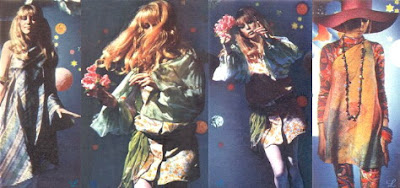
A: In fall ’66, after extended travels to Paris, Athens, Morocco, Madrid and Ibiza - were we worked, designed fashions for boutiques and had an art exhibition in Madrid - Marijke and I arrived in London. There we continued our ‘mission’, which was introducing bright colours in a grey world of pinstriped suits and homburgs under a dreary sky. One day, John and Paul knocked on our door; they had heard about us and had seen our work around town. (We had designed stage outfits for The Hollies and Cream. Marijke made some posters that caught the eye through it’s marvellous technique. Moreover, she had designed the program covers for Brian Epstein’s Saville Theatre. Later we created album covers for other groups, for instance the Incredible String Band and the Move. Also, we created stage outfits for Procol Harum.) During John and Paul’s first visit to our house in Bayswater, they saw the ‘Wonderwall’, a composition consisting of a decorated armoire and a bust, against an arched wall, painted in the style that was up until then new to the world. “I love it, I want to live in it,” John said when he saw the ‘Wonderwall’, and Paul agreed. Afterwards, Marijke laid the tarot cards for Paul. It turned out to be his inspiration for writing "The Fool on the Hill." (The Fool, the zero, being the one of the deck.)
Later, in ’67, the film director Joe Massot was inspired by the "installation" and it became the title of the film he was working on, starring Iain Quarrier, Jane Birkin and Jack MacGowran. The "Wonderwall" was used as a set in the movie and The Fool – Marijke Koger, Josje Leger, Barry Finch and my person – was instrumental to have George Harrison writing the score. Oasis’s single Wonderwall must have been inspired by George’s record and the film. I wonder if they knew the background story.
Q: What did they (or if it was one Beatle in particular, he) initially ask you to do?
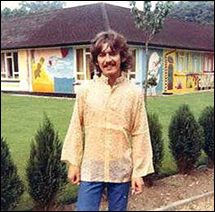
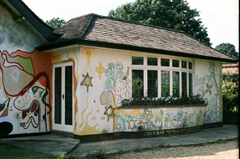
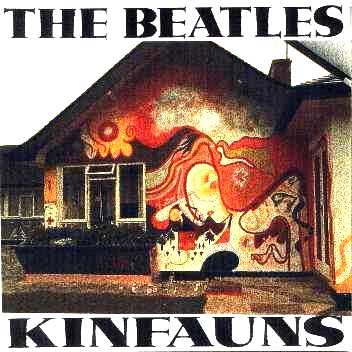
A: To hang out and make some personal outfits. We were invited at the recording session for A Day in the Life. Then we were commissioned to do the inside album cover for "Sgt. Pepper’s Lonely Hearts Club Band." The portraits of the Beatles would be in the open space (left top) and the text in the other. Later, Marijke and Josje designed the costumes for the "All You Need Is Love" worldwide broadcast. During the summer of ’67, Simon and Marijke painted John’s piano and the mural over George and Pattie Harrison’s fire place in Kinfauns, Surrey. After that, we did the Apple Store.
Q: What was it like working for both the Beatles and Apple?
A: A gas!
Q: Any stories about the opening or closing of the Apple boutique?
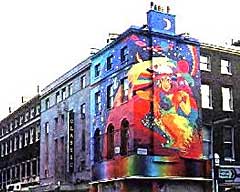
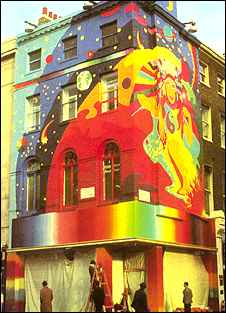
Q: Contrary to the popular story, we didn’t hire some twenty art students for painting the Apple mural and it did not take weeks. Marijke and I painted the mural together on scaffolds in a weekend. We had one assistant, Micky Finn, who we did not know. He happened to pass by when we just started and offered his help. Later, he would be T. Rex’s drummer. There was such a crowd at the Apple opening party that The Fool could not even get in. By the time the Apple Store closed, The Fool had already arrived in the Big Apple to cut our first record, The Fool, produced by Graham Nash, who just had left The Hollies to join David Crosby and Stephen Stills. In ‘72, Seemon & Maryke cut another record in Los Angeles, titled Son of America, again produced by Graham Nash. The single "I Saw You" became a world hit, except for the UK and the U.S.A.
Q: Were you present at the rooftop concert?
A: No, we were already in the U.S.A.
Q: What was your favorite memory of your time there?
Driving the cream coloured Bentley, decorated with The Fool’s logo on the doors and yellow stars on a blue rooftop, through London at night and visiting the private clubs and listening to ska music.
Q: How did the Fool's association with the Beatles end?
Q: Abrupt, but no regrets on either side. Apple was our last involvement with the Beatles. Marijke and I saw John one more time in Hollywood at a party at Gary Kellgren’s (of the Record Plant). John was quite drunk and was in May Pang’s company. He crawled on hands and knees across the room to we were sitting. He embraced us and said, “We sure did something truly incredible, didn’t we?”
All this and so much more is written in my autobiography, "A Fool Such As I." 600 pages including 65 photographs, many in colour, and some pictures of The Beatles that were never published.
(Simon Posthuma's autobiography, "A Fool Such As I," printed in Dutch only, is available
through the Nieuw
Amsterdam website.)


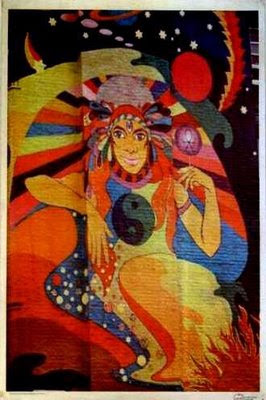
The Fool were a Dutch design collective and band who were influential in the psychedelic style of art in British popular music in the late 1960s. The colourful art draws on many fantastical and mystical themes. The name is a reference to The Fool tarot card.
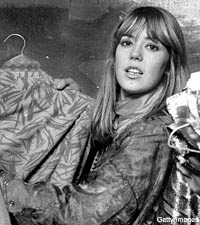
The original members were Dutch artists Simon Posthuma and Marijke Koger, who were discovered by photographer Karl Ferris among the hippie community on the Spanish island of Ibiza in 1966. He took photographs of clothes designed by them, and sent them to London where they were published in The Times (London) and immediately caused a sensation. Ferris took The Fool back to London, and together they opened a studio, with the Dutch artists producing clothes and art, and Ferris pursuing photography. Barry Finch and artist Josje Leeger, joined later. All had been involved with Beatles manager Brian Epstein's Saville Theatre.
Their work includes:
The Fool's best known artworks are undoubtedly those they created for The Beatles in 1966-67. They include:
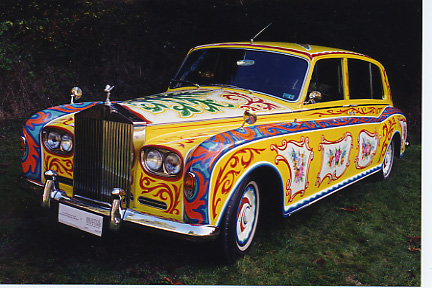
It would appear that, contrary to popular belief, The Fool did not create the psychedelic paintwork on John Lennon's Rolls-Royce.[2]. Sources vary as to who actually painted the designs on the car, although they appear to be unlike The Fool's other graphic designs.
According to an article in the Canadian Conservation Newsletter, the designs were painted by a friend of Lennon's known as "Gypsy Dave". Cynthia Lennon's memoir claims that the work was carried out by "a firm of barge and caravan designers" [3]. An article about the car on the Ottawa Beatles site [4] states that the work was carried out by J.P. Fallon Limited, a coachworks company located in Chertsey, Surrey. The site has a newpaper article confirming this. J.P. Fallon commissioned Steve Weaver's pattern of scroll and flowers (who came up with design) for the Phantom V. The idea to make the car psychedelic was based on a suggestion from Marijke Koger, a member of the Fool who told Lennon to "paint the Rolls like the gypsy wagon" that was in his garden. There is photograph of the template (or artwork board) that Steve Weaver used to create the design for the car at the Ottawa Beatles Site.
That said, the car's paintwork so outraged one elderly woman in central London that she attacked it with her umbrella, shouting: 'You swine, you swine! How dare you do this to a Rolls-Royce!'; Lennon answered by obtaining another Rolls, and painting it flat-black.
(wikipedia)




http://www.maryke.com/


Marijke Koger

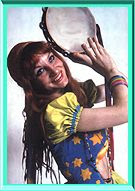


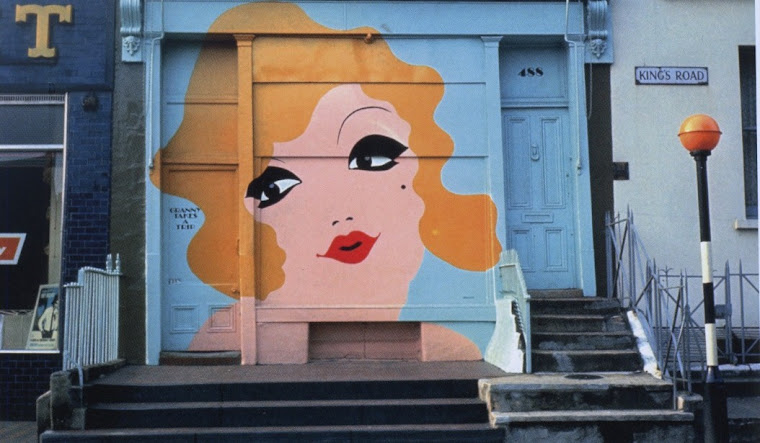


AQUARIUS THEATER LA


THE FOOL AVEC LES BEATLES




/image%2F0865369%2F20180627%2Fob_072583_crystal.jpg)
/http%3A%2F%2Fwww.chroniclelive.co.uk%2Fincoming%2Farticle1339066.ece%2Falternates%2Fs615%2Fmuhammad-ali-593975650.jpg)
/image%2F0865369%2F20160415%2Fob_c3c464_f0ff7387a509afe644775a25b2e06a4e.jpg)
/image%2F0865369%2F20160303%2Fob_7e9aaa_serge-gainsbourg.jpg)

