Lucia Joyce. To Dance in the Wake. Tragic Muse and Wild Beauty: The Story of James Joyce’s Only Daughter
Carol Loeb Shloss
London: Bloomsbury, 2003.
£20.00, 560 pages, ISBN 0-7475-7033-7.
Caroline Marie Paris IV-Sorbonne
"Carol Loeb Shloss teaches English at Stanford University. She has written extensively on Joyce," the dust-jacket
explains. Together with the subtitle of this biography of Lucia Joyce, Tragic Muse and Wild Beauty: The Story of James Joyce's Only Daughter, that suggests that the emphasis is less on
ballet or Lucia Joyce than on James Joyce and literature, less on "dance" than on "in the wake." However, Carol Loeb Shloss’s contention that Lucia's passion and gift for self-expression through
movement drew her father into "reconsidering the performative nature of language as well as the fictional aspects of everyday life" [7] and influenced his writing is appealing. Her claim that
"the story of [Lucia's] struggles, amid all its bitter contention, is one of the great love stories of the twentieth century" [4] between father and daughter is far less convincing, for the
second part of the book, "The Dance of Death," repeatedly depicts their relationship as highly destructive.
The most exciting part of the book is arguably the introduction, enticingly entitled "What happened to Lucia Joyce?" In a
detective-story-like narrative, Carol Loeb Shloss recounts how Lucia Joyce's letters as well as the letters written to her were systematically destroyed or kept away from biographers and
academics by the members of the Joyce family, and primarily by Joyce himself, by their friends and her lover Samuel Beckett, who all felt that it was their duty to protect Lucia’s privacy.
Perhaps their motive in that process of censorship and destruction was less noble than they claimed, she suggests, and they may very well have been trying to construct a safe myth, the
unthreatening cliché of "the mad daughter of a man of genius" [4], a misconception that she intends to correct in this biography. What if Lucia had been a genius, stifled in the name of her
father's comfort and fame, held down to "the margins of someone else's creativity" [80]?
Despite the scarcity of primary sources available, the book is well-researched, as shown in the substantial notes and
bibliography. Such scarcity, however, leads to unwelcome speculation, such as: "In later years, the gift of a book would be the gift of a sentiment, a particular text would be understood as an
invitation to consider the world from the vantage point suggested by the author. Though we cannot know that Joyce read this particular book to Lucia, we can notice that Lucia loved to read" [57].
Except for these uncalled for attempts at imagining Lucia's feelings and perception of her parents' professional, private and even sexual lives, the family's troubled yet joyful travels through
Europe are vividly depicted and give an interesting insight into the turmoil of artistic creation.
It may be regretted that, just as her predecessors, the biographer falls into the trap of myth-writing that she denounces
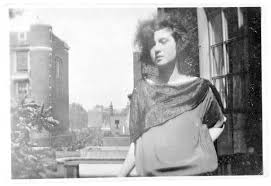
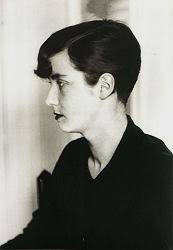
and gives her own aptly refocused but still idealized version of Lucia’s life. Typically, just by looking at a long-searched for photograph of the dancer (reproduced on the cover of the book)
which she unearthed from "one of the folders at the Harry Ransom Humanities Research Center in Austin, Texas" [9], she is able to sense who Lucia was, in an almost supernatural way:That is definitely a lot to be seen in a photograph. Carol Loeb Shloss does not shun lyricism, but if her hagiographical
style can prove tiresome at times, it still serves the rehabilitation of her biographee.
If Shloss's intention is to save Lucia Joyce from the margin, why not consider the interactions between dance and
literature from the dancer's point of view, since, as the reader is informed parenthetically, she wrote poetry—Lucia Joyce also dabbled in book-binding and drawing, taking lessons with Marie
Laurencin. Frustratingly, however, such remarks as: "It was this poetry that Dominique Maroger remembered reading in the 1930s, that Carl Gustav Jung read in 1934 and used to judge Lucia's
'language disorder,' and that Joyce defended to Jung as a language experiment of the new generation" [113] are never followed by any in-depth analysis of the literary interest of her writing,
let alone by any example of it! If her poems have all been destroyed, how credible could any judgement on their psychological or linguistic value be? Carol Joyce Loeb fails to make the utmost
of her main point: to show that, just as Lucia Joyce and her father did, literature and dance "communicate with a secret, inarticulate voice. The writing of the pen, the writing of the body
become a dialogue of artists, performing and counter-performing, the pens, the limbs writing away" [152]. The simile, which in the long run becomes somewhat of a cliché, never leads to
genuinely theoretical remarks.
Carol Loeb Shloss is at her most convincing when her half-hearted literary perspective gives way to the depiction of
the wider picture of the cultural and psychoanalytical background of Lucia Joyce's life. Her references to Friedrich Nietzsche are particularly enlightening. She recaptures the unrestrained
creativity that prevailed among dancers at the beginning of the twentieth century. Lucia Joyce studied and danced in several capitals of Europe with the greatest artists of her time. From
Jaque-Dalcroze to Raymond Duncan, from Margaret Morris to Jean Borlin, from the Dadaists to the surrealists, she worked with them all—and that's why the index comes in handy; yet the
performances she took part in are only summarily described and very rarely commented on from an aesthetic standpoint. However, the enthusiastic, unpretentious spirit in which dancers came
together and experimented with new art forms is strikingly rendered, as is the bohemian way of life of a dancer who befriended penniless artists as well as the Guggenheims. The confused,
self-contradictory psychoanalytical theories and therapeutic programs Lucia Joyce was subjected to after 1930, as her parents sent her to noted psychoanalysts they distrusted—Jung included—at
a period when, to quote the teacher of most of her doctors, "with many patients, the number of diagnoses made equals the number of institutions they ha[d] been to" [263], casts Lucia as the
victim not just of her parents' prejudices and shortcomings but also of those of her time.
According to Samuel Beckett, Lucia Joyce could not live a life of her own because she was "already part of a better
story" [282], her all but incestuous love for her father. How, then, could the reader expect Carol Loeb Shloss not to portray Lucia Joyce "in the wake" of her father? The dancer is upstaged
by the writer to the final sentence: "Love for a child is infinite" [460]. Given her willingness to fill in the gaps of the missing evidence with imagination and poetical licence—she calls
her biography a "creative tribute" [456]—despite her careful attention to the documents, one is left wondering what work of fiction she might have produced, had she decided to write in the
vein of Colum McCann's fictional biography of Nureyev in Dancer.
James Joyce said, in 1934: ''People talk of my influence on my daughter, but what about her influence on me?'' Or so the Joyce biographer Richard Ellmann was told, 20 years afterward, by
Joyce's close friend Maria Jolas. At around the same time, Ellmann also interviewed Carl Jung, who in 1934 had ''treated'' Joyce's daughter. Lucia Joyce and her father, Jung told Ellmann, were
''like two people going to the bottom of a river, one falling and the other diving.'' In the matter of his daughter, Ellmann commented, Joyce was ''foolish fond like Lear.''
Lear, Jung and Joyce: what hope could there be of rescuing the drowned voice of the mad daughter from such powerful father figures? Carol Loeb Shloss's strenuous, emotional attempt to fish
Lucia up from the depths of incarceration and obliteration has to do battle with very weighty pressures, giving her book a strained, excitable, defiant air. For its project of resuscitation to
succeed, it must claim that Lucia's ''influence on'' Joyce was indeed paramount: that they were creative collaborators, like-minded modernists, ''dancing partners.'' ''Joyce's art surrounded''
Lucia, Shloss says, ''haunted her from birth; and she in turn was part of the life that surrounded the maker of that art. She gave him the means to fling it amid planetary music.'' ''The place
where she meets her father is not in consciousness but in some more primitive place before consciousness. They understand each other, for they speak the same language, a language not yet
arrived into words and concepts but a language nonetheless. . . . In the room are flows, intensities, unexpressed longings.''
I quote so much because this sort of fervid glop is served up on many pages. It is a rhetoric that damages the book's credibility, making it read more like an exercise in wish fulfillment than
a biography. I lost count of the incidences of ''We can imagine'' or ''It is safe to imagine'' or ''We can speculate'' or ''We can picture her'' or -- most revealingly -- ''I like to imagine'':
''Among all the letters that were destroyed, there was one, I like to imagine, that expressed Lucia's gratitude to her father for persisting in his belief in her.'' And then again, perhaps
there wasn't.
Lucia, the second child of James Joyce and Nora Barnacle, was born in 1907 in the pauper's ward of a hospital in Trieste. Her parents were extremely poor, and her childhood was spent moving
from one flat or hotel room -- or country -- to another. Meanwhile her father tried out numerous money-making schemes (importing Donegal tweeds to Europe was one that didn't come off), taught,
drank and wrote: first ''Portrait'' and ''Exiles,'' then ''Ulysses'' (which ''grew up'' alongside Lucia), and then, for 17 years, ''Finnegans Wake.'' By the time she was seven, in 1914, Lucia
had lived at five addresses, always cooped up with her brother, Giorgio: ''You are locking us up like pigs in a sty,'' they were said to have shouted once to their departing parents. (An incest
plot is hinted at but not spelled out.) During World War I, the Joyces moved from Trieste to Zurich to Paris. Lucia, passing rapidly from school to school, knew some French, Italian and German,
showed musical talent and, in her teens, began to study dance. Starting with a course of eurhythmics at the Jaques-Dalcroze Institute in Paris, she worked, in the 1920's, with a succession of
radically innovative dance teachers.
There was, first, Isadora Duncan's peculiar brother, Raymond, who went in for Greek tunics and sandals, pacifism and vegetarianism, and flowing Dionysian rhythms. Then, Margaret Morris (William
Morris's granddaughter), advocate of expressive open-air dance as a recipe for health, and her talented colleague Lois Hutton, who formed a group of bohemian, experimental women dancers in the
South of France called Les Danseuses de Saint-Paul, one of whom, for a time, was Lucia. Other mentors were the brilliant Jean Borlin, whose primitivist and surreal collaborations with Paul
Claudel, Darius Milhaud and George Antheil rivaled the Ballets Russes in notoriety and influence; Elizabeth Duncan (Isadora's sister) and the German pianist Max Merz, whose Salzburg school
promoted Aryan body-worship; and Lubov Egorova, Diaghilev's colleague and a ferocious teacher. The best feature of Shloss's book is its vivid, informed description of these experimental dance
groups in 1920's Europe, and her account of how Lucia came into contact with modernism and surrealism while her father was writing the ''Wake.'' But, as relentless as Egorova, Shloss has to
push this parallel to its farthest possible point -- and make Lucia into a collaborator on the ''Wake''; as it were, its co-author.
What Shloss can prove is that Lucia had talent. An interviewer in The Paris Times in 1928 praised her skills as choreographer, linguist and performer, and predicted that when she reached her
''full capacity for rhythmic dancing,'' James Joyce ''may yet be known as his daughter's father.'' But it was just then that things began to go wrong. In 1929, Lucia's plans to teach dance fell
through; she either gave up or (Shloss's theory) was forced by family opposition to discontinue her career. There was a series of disturbing events: her father's eye operation, her mother's
illness, her brother's affair with the older, married Helen Fleischman, the Joyces' civil marriage, 26 years after they started living together, and the shock of discovering she was
illegitimate. ''If I am a bastard,'' Lucia was said to have screamed at Nora in one of their rows, ''who made me one?''
Lucia embarked on her own sexual adventures, which Nora Joyce's biographer Brenda Maddox summed up dismissively as promiscuity, but which Shloss prefers to link to her brother's affair and to
the free-living artistic world she moved in. She fell in love with her father's literary disciple, Samuel Beckett, who told her that he was more interested in Joyce than in her. (This led to a
breach between Joyce and Beckett). In his ''Dream of Fair to Middling Women,'' the ''jewelly,'' ''wanton,'' ''hollow'' Syra-Cusa, whom Shloss reads as Lucia, is ''impotently besotted'' with
Belacqua, who thinks of her as ''hors d'oeuvre'' -- and ''a cursed nuisance.'' She had short-lived affairs with the artist Alexander Calder and with an American art student. In 1932 there was a
brief, hopeless engagement to a young Russian Jew, Alec Ponisovsky. Instead of dancing, she was doing some graphic work for Joyce -- illustrations for ''Pomes Penyeach,'' illuminated letters
(which were unfortunately lost by the publishers) for a children's book. ''Casting his daughter as his own collaborator,'' Shloss says, ''he formalized and made visible the collusion in place
between them.''
But from the early 1930's onward, Lucia's behavior became increasingly erratic -- or, in Shloss's view, angry and frustrated. Her ''scenes'' were all intensely dramatic. She vomited up her food
at table; she threw a chair at Nora on Joyce's 50th birthday; she staged a tremendous tantrum at the Gare du Nord, preventing the family from leaving Paris for London; she went into a
''catatonic'' trance for several days after her engagement party; she cut the telephone wires on the congratulatory calls that friends were making about the imminent publication of ''Ulysses''
in America; she set fire to things; she hit her mother; she wrote urgent telegrams and many, many letters.
Desperately, various attempts were made to treat, diagnose or ''cure'' Lucia Joyce. During her first, unwilling incarceration (engineered by Giorgio) in a French sanitarium in 1932, she was
said to be suffering from ''hebephrenic psychosis'' (the young person's version of what Kraepelin had defined as dementia praecox). Then she was placed under a disciple of Bleuler at the
Burgholz psychiatric clinic in Zurich, where schizophrenia was diagnosed. She was treated by a Dr. Forel, who recommended ''persuasion'' and surveillance. She was analyzed by Jung, who thought
her so bound up with her father's psychic system that analysis could not be successful. His colleague Cary Baynes diagnosed repression. Friends of the Joyces -- Maria Jolas, Mary Colum, the
heroically well-behaved Harriet Weaver, Joyce's married sister Eileen -- all tried to look after Lucia, in London or Paris or Ireland, more or less disastrously. Her treatments included
injections with sea water and animal serum, barbiturates and solitary confinement.
Shloss maintains that Lucia's aberrant behavior was linked to her dancing and to her father's experiments in language: all three forms of ''Wakean dance'' are seen as modernist projects. When
she was prevented from dancing, and when her Dionysian expressiveness was controlled by rationalist, Apollonian doctors, Lucia continued, in her gestures, to act out ''the more sinister
choreography of the unconscious.'' Her treatments -- drugs, incarceration -- made her worse. Her actions -- incendiarism, singing all night, throwing books out of the window -- were ''her
repertoire of coping behaviors.''
When World War II broke out, Lucia was in a clinic in Ivry. Joyce, who never abandoned her, and never believed that she was ''mad,'' moved heaven and earth to get her out of occupied France.
But he died, suddenly, of peritonitis, in January 1941, at the age of 59. Lucia was abandoned. In 1951, Harriet Weaver had her moved to a mental hospital in Northampton, England, and there she
remained until her death in 1982. Occasionally, she would be visited by family friends, or by Joyce's biographer, and she would write down or say things about herself, sad messages like: ''My
father was crying once with the pain he had in his eyes but I was awkward and could not console him''; or ''My love was Samuel Beckett. I wasn't able to marry him.''
That anything at all survives of her letters and sayings seems remarkable, given the ''expunging'' of Lucia that Shloss claims was going on even during Joyce's lifetime. She calls her biography
''a story that was not supposed to be told.'' All such recuperative biographies of ''silenced'' figures attached to great male writers -- whether it's Zelda Fitzgerald, or Vivienne Eliot, or
Ellen Ternan -- require someone to be blamed and shamed. Here, almost everyone is to blame: Richard Ellmann for too readily accepting Maria Jolas's version of Lucia; Joyce's friends -- Jolas
herself, Stuart Gilbert, Harriet Weaver -- for treating Lucia as a madwoman and for ''deciding that a book was more important than a girl's life'' ; Giorgio Joyce for having his sister
incarcerated (''her own brother!''), for abandoning her after their father's death and for making off with Jolas's trunk full of family papers, which were never seen again; Brenda Maddox (whose
book is praised but contradicted) for making Nora the heroine; Nora for her jealousy of her daughter; Stephen Joyce, Lucia's nephew, for continuing in his attempts to protect his family's
long-violated privacy.
The only characters who escape without blame are Lucia, who is completely romanticized (we don't hear much about her squint and her hairy chin), and -- on the whole -- Joyce. This is not a
child-abuse story but a story of love and creative intimacy. And even if, like me, you are skeptical of Shloss's devout belief in Lucia as her father's second self, this biography will
certainly alert you to her presence, should you ever be reading ''Finnegans Wake'' -- a pathetic, vanishing figure, flitting through her father's book:
''Then Nuvoletta reflected for the last time in her little long life and she made up all her myriads of drifting minds in one. She cancelled all her engauzements. She climbed over the
bannistars; she gave a childy cloudy cry: Nuee! Nuee! A lightdress fluttered. She was gone. And into the river that had been a stream . . . there fell a tear, a singult tear, the loveliest of
all tears . . . for it was a leaptear. But the river tripped on her by and by, lapping as though her heart was brook: Why, why, why! Weh, O weh! I'se so silly to be flowing but I no canna
stay!''
Hermione Lee is the Goldsmith's professor of English at Oxford. Her books include ''Virginia Woolf.''
A FIRE IN THE BRAIN
by JOAN ACOCELLA
The difficulties of being James Joyce’s daughter.
Issue of 2003-12-08
Posted 2003-12-01
William Butler Yeats, when he was riding the bus, would occasionally go into a compositional trance. He would stare straight ahead and
utter a low hum and beat time with his hands. People would come up to him and ask him if he was all right. Once, his young daughter, Anne, boarded a bus and found him in that condition
among the passengers. She knew better than to disturb him. But when the bus stopped at their gate, she got off with him. He turned to her vaguely and said, “Oh, who is it you wish to
see?”
When I think of what it means to be an artist’s child, I remember that story. There are worse fates. But in the artist’s household the
shifts that the children must endure—they can’t make noise (he’s working), they can’t leave on vacation (he hasn’t finished the chapter)—are combined with a mystique that this is all
for some exalted cause, which they must honor even though they are too young to understand it. Furthermore, if the artist is someone of Yeats’s calibre, the children, as they develop,
will measure themselves against him and come up short. In fact, many artists’ children turn out just fine, and grow up to edit their parents’ work and live off the royalties. But some
do not—for example, James Joyce’s two children. His son became an alcoholic; his daughter went mad. Carol Loeb Shloss, a Joyce scholar who teaches at Stanford, has just written a book
about the latter: “Lucia Joyce: To Dance in the Wake” (Farrar, Straus & Giroux; $30).
Lucia grew up in a disorderly household. Joyce had turned his back on Ireland in 1904, when he was twenty-two. Convinced that he was a genius
but that his countrymen would never recognize this, he persuaded Nora Barnacle, his wife-to-be, to sail with him to the Continent. They eventually landed in Trieste, and there, for the next
decade or so, he worked as a language teacher and completed “Dubliners” and “A Portrait of the Artist as a Young Man.” With the publication of “Portrait,” in 1916, he acquired rich patrons, but
until then—that is, throughout his children’s early years—the Joyces were very poor. Some days they went without dinner. Their first child, Giorgio, was born in 1905, a bonny, easy baby, and,
furthermore, a boy. Nora adored him till the day she died. Two years after Giorgio came Lucia, a sickly, difficult child, and a girl, with strabismus. (That is, she was cross-eyed. Nora, too,
had strabismus, but hers was far less noticeable.) Lucia’s earliest memories of her mother were of scoldings. Joyce, on the other hand, loved Lucia, spoiled her, sang to her, but only when he
had time. He worked all day and then, on many nights, he went out and got blind drunk. The family was evicted from apartment after apartment. By the age of seven, Lucia had lived at five
different addresses. By thirteen, she had lived in three different countries. The First World War forced the Joyces to move to Zurich; after the war, they settled in Paris. As a result, Lucia
received a spotty education, during which she was repeatedly left back by reason of having to learn a new language.
Was she strange from childhood? With people who become mentally ill as adults, this question is always hard to answer, because most witnesses,
knowing what happened later, read it back into the early years, and are sure that the signs were already there. Richard Ellmann, the author of the standard biography of Joyce, and Brenda
Maddox, in her “Nora: A Biography of Nora Joyce,” both note that the young Lucia seemed to stare off into space, but the strabismus might account for this. It is also said that she was reticent
socially. Although she was talkative at home—a “saucebox,” her father called her—she apparently went through periods when she spoke to few people outside her family. But the language-switching
could explain this. A friend of the family described her, in her twenties, as “illiterate in three languages.” It was four, actually: German, French, English, and Triestine Italian. The last
was her native tongue, the language that her family used at home, not just in Trieste but forever after (because Joyce found it easier on the voice). It was not, however, what people spoke in
most of the places where she lived.
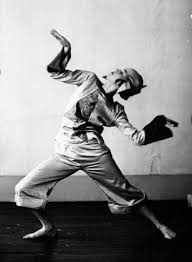
When Lucia was fifteen, she began taking dance lessons, mostly of the new, anti-balletic, “aesthetic” variety, and this became her main interest
during her teens and early twenties. She started at the Dalcroze Institute in Paris, then moved on to study with the toga-clad Raymond Duncan, Isadora’s older brother. Eventually, she hooked up
with a commune of young women who performed now and then, in Paris and elsewhere, as Les Six de Rythme et Couleur. However briefly, Lucia was a professional dancer. She is said to have excelled
in sauvage roles. But eventually she left this group, as she left every group. (I count nine dance schools in seven years.) In part, that may have been due
to lack of encouragement from her family. Nora reportedly nagged Lucia to give up dancing. According to members of the family, she was jealous of the attention the girl received. As for Joyce,
Brenda Maddox says he felt “it was unseemly for women to get on the stage and wave their arms about.”
Finally, after seven years’ training in the left wing of dance, Lucia bolted to the right wing, and embarked on a backbreaking course of ballet
instruction with Lubov Egorova, formerly of the Maryinsky Theatre, in St. Petersburg. This was a terrible idea. Professional ballet dancers begin their training at around the age of eight.
Lucia was twenty-two. She worked six hours a day, but of course she couldn’t catch up, and, in her discouragement, she concluded that she was not physically strong enough to be a dancer of any
kind—a decision, Joyce wrote to a friend, that cost her “a month’s tears.”
The loss of her dance career was not the only grief that Lucia suffered in her early twenties. The publication of “Ulysses,” in 1922, made Joyce
a star, and there were plenty of young artistic types in Paris who thought it would be nice to be attached to his family. When Giorgio was in his late teens, an American heiress, Helen
Fleischman, laid claim to him; eventually he moved in with her. Lucia, who had been very close to Giorgio, felt abandoned. She was also scandalized. (Fleischman was eleven years older than
Giorgio, and married.) Finally, she wondered what she was missing. She decided to find out, and in the space of about two years she was rejected by three men: her father’s assistant, Samuel
Beckett, who told her he wasn’t interested in her in that way; her drawing teacher, Alexander Calder, who bedded her but soon went back to his fiancée; and another artist, Albert Hubbell, who
had an affair with her and then went back to his wife. Lucia became more experimental. She took to meeting a sailor at the Eiffel Tower. She announced that she was a lesbian. During these
romantic travails, she became more distressed over her strabismus. She had the eye operated on, but it didn’t change. Soon afterward, her pride received another blow: her parents told her that
they were going to get married. (Giorgio’s marriage to the newly divorced Fleischman got them thinking about legality and inheritance.) This is how she discovered that they never had been
married and that she was a bastard.
The following year, on Joyce’s fiftieth birthday, Lucia picked up a chair and threw it at her mother, whereupon Giorgio took her to a medical
clinic and checked her in. “He thereby changed her fate,” Shloss writes. That is a strong judgment, but it is true in part, because the minute an emotionally disturbed person is placed in an
institution the story enters a new phase, in which we see not just the original problem but its alterations under institutionalization: the effects of drugs, the humiliation of being locked up
and supervised, the consequent change in the person’s self-image and in other people’s image of him or her. For the next three years, Lucia went back and forth between home and hospital. One
night in 1933, she was at home when the news came that a United States District Court had declared “Ulysses” not obscene (which meant that it could be published in the States). The Joyces’
phone rang and rang with congratulatory calls. Lucia cut the phone wires—“I’m the artist,” she said—and when they were
repaired she cut them again. As her behavior grew worse, her hospitalizations became longer. She went from French clinics to Swiss sanitariums. She was analyzed by Jung. (Briefly—she wanted no
part of him.) One doctor said she was “hebephrenic,” which at that time was a subtype of schizophrenia, describing patients who showed antic, “naughty” behavior. Another diagnostician said she
was “not lunatic but markedly neurotic.” A third thought the problem was “cyclothymia,” akin to manic-depressive illness. At one point in 1935, when she seemed stabler, her parents let her go
visit some cousins in Bray, a seaside town near Dublin. There she set a peat fire in the living room, and when her cousins’ boyfriends came to call she tried to unbutton their trousers. She
also, night after night, turned on the gas tap, in a sort of suicidal game. Then she disappeared to Dublin, where she tramped the streets for six days, sleeping in doorways, or worse. When she
was found, she herself asked to be taken to a nursing home.
Soon afterward, the Joyces put her in an asylum in Ivry, outside Paris. She was twenty-eight, and she never lived on the outside again. She
changed hospitals a few times, but her condition remained the same. She was quiet for the most part, though periodically she would go into a tearing rage—breaking windows, attacking people—and
then she would be put in a straitjacket until she calmed down. This went on for forty-seven years, until her death, in 1982, at the age of seventy-five.
Carol Shloss believes that Lucia’s case was cruelly mishandled. When Lucia fell ill, she at last captured her father’s sustained attention. He
grieved over her incessantly. At the same time, he was in the middle of writing “Finnegans Wake,” and there were people around him—friends, patrons, assistants, on whom, since he was going
blind, he was very dependent—who believed that the future of Western literature depended on his ability to finish this book. But he was not finishing it, because he was too busy worrying about
Lucia. He was desperate to keep her at home. His friends—and also Nora, who bore the burden of caring for Lucia when she was at home, and who was the primary target of her fury—insisted that
she be institutionalized. The entourage finally prevailed, and Joyce completed “Finnegans Wake.” In Shloss’s view, Lucia was the price paid for a book.
But, as Shloss tells it, the silencing of Lucia went further than that. Her story was erased. After Joyce’s death, many of his friends and
relatives, in order to cover over this sad (and reputation-beclouding) episode, destroyed Lucia’s letters, together with Joyce’s letters to and about her. Shloss says that Giorgio’s son,
Stephen Joyce, actually removed letters from a public collection in the National Library of Ireland. When Brenda Maddox’s biography of Nora was in galleys, Maddox was required to delete her
epilogue on Lucia in return for permission to quote various Joyce materials. Shloss doesn’t waste any tears over Maddox, however. In her opinion, Maddox and Ellmann are among the sinners,
because they assumed, and thereby persuaded the public, that Lucia was insane. (Whenever Shloss catches Ellmann or Maddox in what seems to her a factual error, she records it snappishly—a tone
inadvisable for a writer who, forced to swot up three decades of dance history, made some errors herself.) But the biographers are a side issue. None of Lucia’s letters survive as original
documents. Nor is there any trace of her diaries or poems, or of a novel that she is said to have been writing. In other words, most of the primary sources for an account of Lucia Joyce’s life
are missing. “This is a story that was not supposed to be told,” Shloss writes. Therefore she tells it with a vengeance.
Shloss says that Lucia was a pioneering artist: “Through her we watch the birth of modernism.” She compares her to Prometheus, “privately
engaged in stealing fire.” She compares her to Icarus, who flew too close to the sun. Insofar as these statements have to do with Lucia’s dance career, Shloss is as hard up for evidence as all
other people writing about dance that predated the widespread use of film and video recording. What those writers do is quote reviewers and witnesses. But Lucia’s stage career was very short;
Shloss is able to document maybe ten or twenty professional performances, and Lucia’s contributions to them were apparently not reviewed. Once, in 1929, when she competed in a dance contest in
Paris, a critic singled her out as “subtle and barbaric.” Apropos of that performance, Shloss also quotes the diary of Joyce’s friend Stuart Gilbert: “Ballet yesterday; fils prodigue is a compromise between pas d’acier (steps of steel) and neo-Stravinsky.” This would be an interesting compliment if
the prodigal son in question were Lucia, but what Gilbert is clearly describing is George Balanchine’s ballet “Le Fils Prodigue,” which had its première in Paris, with Diaghilev’s Ballets
Russes, three days before Lucia’s dance contest.
Shloss’s evaluation of Lucia as an artist is not limited to her dance career, however. Lucia, she tells us, collaborated with Joyce on
“Finnegans Wake.” One of Lucia’s cousins, Bozena Berta Schaurek, visited the Joyces briefly in 1928, and in an interview fifty years later she recalled something from that visit: while Joyce
worked, “Lucia danced silently in the background.” Joyce prided himself on his ability to write under almost any conditions, so if his niece saw him, once or twice, working in the same room
where Lucia was practicing, this would not be surprising. But in Shloss’s mind Schaurek’s report prompts a vision:
There are two artists in this room, and both of them are working. Joyce is watching and learning. The two communicate with a
secret, unarticulated voice. The writing of the pen, the writing of the body become a dialogue of artists, performing and counterperforming, the pen, the limbs writing away. The father notices the dance’s autonomous eloquence. He understands the body to be the hieroglyphic of a mysterious writing, the dancer’s steps to be an alphabet of the
inexpressible. . . . The place where she meets her father is not in consciousness but in some more primitive place before consciousness. They understand each other, for they speak the same
language, a language not yet arrived into words and concepts but a language nevertheless, founded on the communicative body. In the room are flows, intensities.
Shloss thinks that this artistic symbiosis went on for years and that out of it came the theme of “Finnegans Wake” (flow), its linguistic
experiments, much of its imagery, and also, because dance is abstract, its quasi-abstract quality. In return for these artistic gains, Shloss says, Lucia’s life was forfeited. Transfixed by
Joyce’s gaze, she became too self-aware. And magicked by her relationship with him—“one of the great love stories of the twentieth century,” Shloss calls it—she could never form an attachment
to another man. Even years later, when Lucia is in the sanitarium and doing bizarre things—painting her face black, sending telegrams to dead people—Shloss believes that this was Lucia’s way of
giving her father material. She wasn’t schizophrenic; she was working on “Finnegans Wake.”
This elevation of Lucia to the role of collaborator on “Finnegans Wake” is the book’s most spectacular act of inflation, but by no means the
only one. The less Shloss knows, the more she tells us. On Lucia’s studies with Raymond Duncan, for example, she seems to have almost no information. But here, among many other things, is what
she says on the subject:
Lucia’s mind was filled with the grammar of vitality, prizing the dynamic over the static order. She imagined herself in
terms of tension and its release; she felt the anxieties of opposing muscle to muscle and the heady mastery of resistances, knew the peace of working with gravity and not against it. To drop,
to rebound, to lift, to suspend oneself. To fall and recover, to know the experience of grounding oneself and then arising to circle to the edge of ecstasy. Priests danced, children danced,
philosophers’ thoughts rose and fell in rhythmic sequence; lovers danced, and so did Lucia.
This is what you get when you tear up letters on a biographer. Underlying that passage—indeed, the whole book—are many of the irrationalist
formulas associated in the public mind with dance. Painting is an art, writing is an art, but dance is a religion, an immolation. It is primitive, it is sexual, it is Dionysiac. (Shloss gives
us a talk on Nietzsche.) It is an ecstasy, an obsession—the Red Shoes. Therefore it is cousin to insanity. Shloss points us to Zelda Fitzgerald, who also threw herself into ballet in her
twenties, also studied with Egorova, and also went mad. (The two women even ended up in the same Swiss hospital, though Zelda was gone before Lucia checked in.) Nijinsky, too, is invoked. And
Lucia’s symptoms are repeatedly described as her way of dancing.
In some sections, however, Shloss forgets that she is writing a symbolist poem or a Laingian treatise and starts writing a biography. That, of
course, is when she has some information to go on. At one juncture, she quotes from a history of Lucia that Joyce and his friend Paul Léon wrote for one of the hospitals that she was sent to:
“The patient insists that despite her diligence, her talent and all her exertions, the results of her work have come to nothing. The brother, her contemporary, whom she previously idolized, has
never worked at anything, is well known, has married wealth, has a beautiful apartment, a car with a chauffeur and, on top of it all, a beautiful wife.” Lucia herself said to a companion that
her situation was “just as if you had been very rich, and collected many valuable things, and then they were taken away from you.” These are modest statements, about cars and money, not
Dionysus, but they are the ones that make you want to cry.
Another poignant section of the book has to do with Joyce’s efforts on Lucia’s behalf. Joyce believed that Lucia’s problems were somehow
inherited from him: “Whatever spark or gift I possess has been transmitted to Lucia and it has kindled a fire in her brain.” (In fact, the fire may have been transmitted by Nora, whose sister
Dilly spent a year and a half in a lunatic asylum.) He tried to find ways to heal her, please her. He bought her a fur coat (“My wish for you is warmth and beauty”), and when she lost it he
bought her another one. To replace dancing, he persuaded her to take up book illustration—she drew lettrines, ornamental capitals—and he secretly gave
publishers the money to pay her for her work. He didn’t think she was crazy; he thought she was special—“a fantastic being,” with her own private language. “I understand it,” he said, “or most
of it.” If there was something wrong with her, maybe it was an infection, or a hormone imbalance. (She was given hormones, and also injections of seawater. The treatment of schizophrenia in
those days was basically stabs in the dark, as it is still.) He spared no expense. In 1935, Léon reported that three-quarters of Joyce’s income was going to Lucia’s care. When the Germans
invaded France, in 1940, and the family had to flee to Switzerland, Joyce practically killed himself in the vain effort to arrange for Lucia to go with them. Indeed, he may have killed himself.
A month after the family arrived in Zurich, he died of a perforated ulcer.
Shloss loves Joyce for the pains he took over Lucia. The enemies in her book, apart from the letter-destroyers, are Nora and Giorgio—especially
Giorgio, who, though by this time he spent his days in an alcoholic haze, was always forgiven everything by his family, and who, time and again, was the first person to say that his sister
should be put away. Shloss repeatedly suggests—again, without evidence—that there may have been some sexual contact between Lucia and Giorgio when they were in their teens or earlier, and that
Giorgio, in his rush to institutionalize her, may have been trying to silence her on this subject.
Shloss’s book is part of a tradition, the biography-of-the-artist’s-woman—a genre that is now about thirty years old, as old as its source,
modern feminism. Its goal is to show that many great works of art by men were fed on the blood of women, who were then, at best, forgotten by history or, at worst, maddened by their
exploitation and then clapped in an institution. In the latter cases—Shloss’s “Lucia,” Carole Seymour-Jones’s “Painted Shadow: The Life of Vivienne Eliot, First Wife of T. S. Eliot, and the
Long-Suppressed Truth About Her Influence on His Genius”—these books can be very indignant. (Not always. Nancy Milford’s biography of Zelda Fitzgerald basically comes down on Scott’s side.)
When the woman is merely unacknowledged, the tone tends to be milder, as in Brenda Maddox’s “Nora”—which, pace Shloss, says that Nora was the primary
inspiration for Joyce’s work—or Ann Saddlemyer’s “Becoming George: The Life of Mrs. W. B. Yeats,” which tells the weird story of how Yeats’s wife, Georgie, was the medium (literally) through
which he reached the spirit world and thus found the subject of his late work. In recent years, possibly because most of the really shocking cases have been used up, the arguments seem to be
getting subtler. In Stacy Schiff’s “Véra (Mrs. Vladimir Nabokov)” we are shown a woman whose contribution to her husband’s work was to meld with him in the creation of a single, shared
personality, which then wrote the books and lived the life—a curious phenomenon.
All these biographies, subtle or not, are valuable, and not only for the sake of justice
(when that is what they achieve) but because they tell an important truth about how artists get their work done. Many people are brilliant, and from that you may get one novel, as Zelda
Fitzgerald did. But to write five novels (Scott) or seventeen (Nabokov)—to make a career—you must have, with brilliance, a number of less glamorous virtues, for example, patience, resilience,
and courage. Lucia Joyce encountered obstacles and threw up her hands; James Joyce faced worse obstacles—for most of his writing life, publishers ran from him in droves—but he persisted. When
the critics made fun of Zelda’s novel, she stopped publishing; when Scott had setbacks—indeed, when he was a falling-down drunk—he went on hoping, and working. Lucia and Zelda may have been
less gifted than the men in question. But there is something else going on here, too, which the biographies-of-the-artists’-women record: that while nature seems to award brilliance equally to
men and women, society does not nurture it equally in the two sexes, and thus leaves the women more discourageable. Nor, in females, does the world reward selfishness, which, sad to say,
artists seem to need, or so one gathers from the portraits of the men in these books. One can also gather it from biographies of the women who did not lose heart—for example, George Eliot,
whose books were the product of a life custom-padded by her mate, George Lewes. (Phyllis Rose, in her “Parallel Lives: Five Victorian Marriages,” reports that for twenty-four years Lewes
screened Eliot’s incoming letters, together with all reviews of her books, and threw away anything that might distress her.) Then there is Virginia Woolf, whose novels would never have been
written had she not had non-stop nursing care from Leonard Woolf. Virginia knew this, and seems to have decided she deserved it, or so she suggests in “A Room of One’s Own.” But, male or
female, once the artist walks into that private room and closes the door, a lot of people are going to feel shut out—are going to be shut out—and they may
suffer.
<br />
Many institutions limit access to their online information. Making this information available will be an asset to all.<br />
<br />
Paper On Research<br />
<br />
<br />










)
)
)


 1911
1911


/image%2F0865369%2F20180627%2Fob_072583_crystal.jpg)
/http%3A%2F%2Fwww.chroniclelive.co.uk%2Fincoming%2Farticle1339066.ece%2Falternates%2Fs615%2Fmuhammad-ali-593975650.jpg)
/image%2F0865369%2F20160415%2Fob_c3c464_f0ff7387a509afe644775a25b2e06a4e.jpg)
/image%2F0865369%2F20160303%2Fob_7e9aaa_serge-gainsbourg.jpg)